What is a chocolate ballotin? Discovering Belgium's iconic chocolate box
A taste of what's ahead
- A ballotin is a folded cardboard box invented in Belgium to protect and present pralines.
- It differs from other chocolate boxes through its tapered, glue-free fold that cradles each chocolate individually.
- The chocolate ballotin is one part of a wider family of boxes at Maison Pierre Marcolini, alongside the Malline and other drawer formats.
- The shape has barely changed in a century, but what fills it keeps evolving.
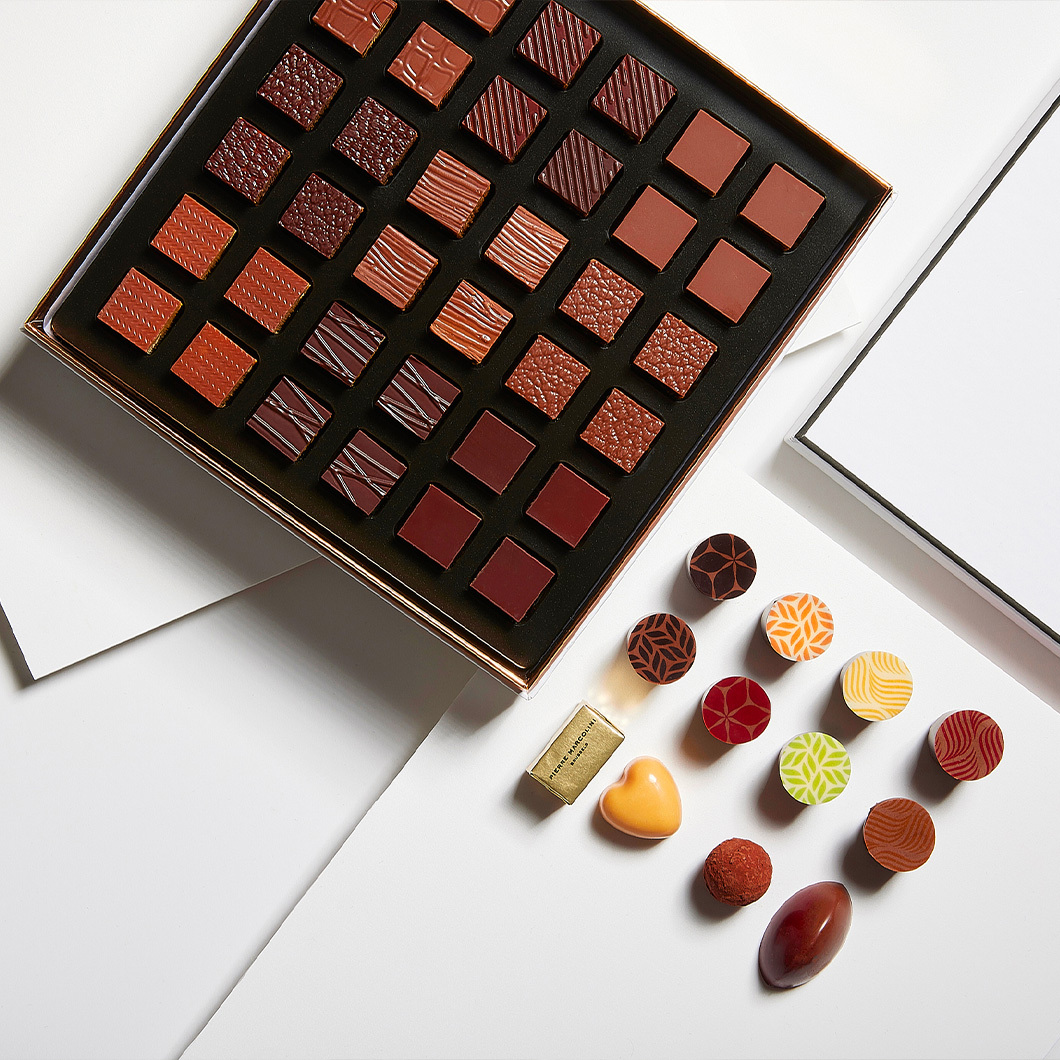
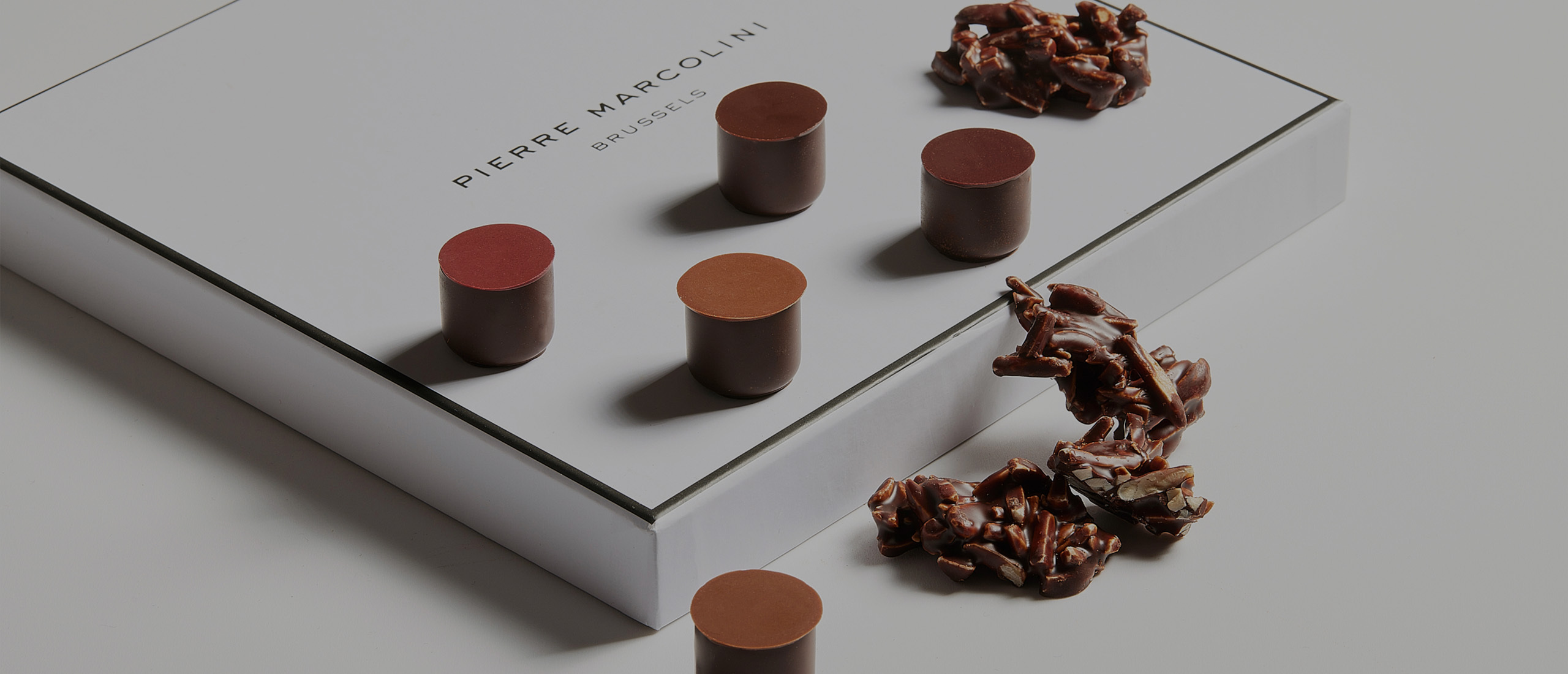
- Every Pierre Marcolini ballotin is filled with chocolate made bean-to-bar, in the Maison's own Brussels atelier.
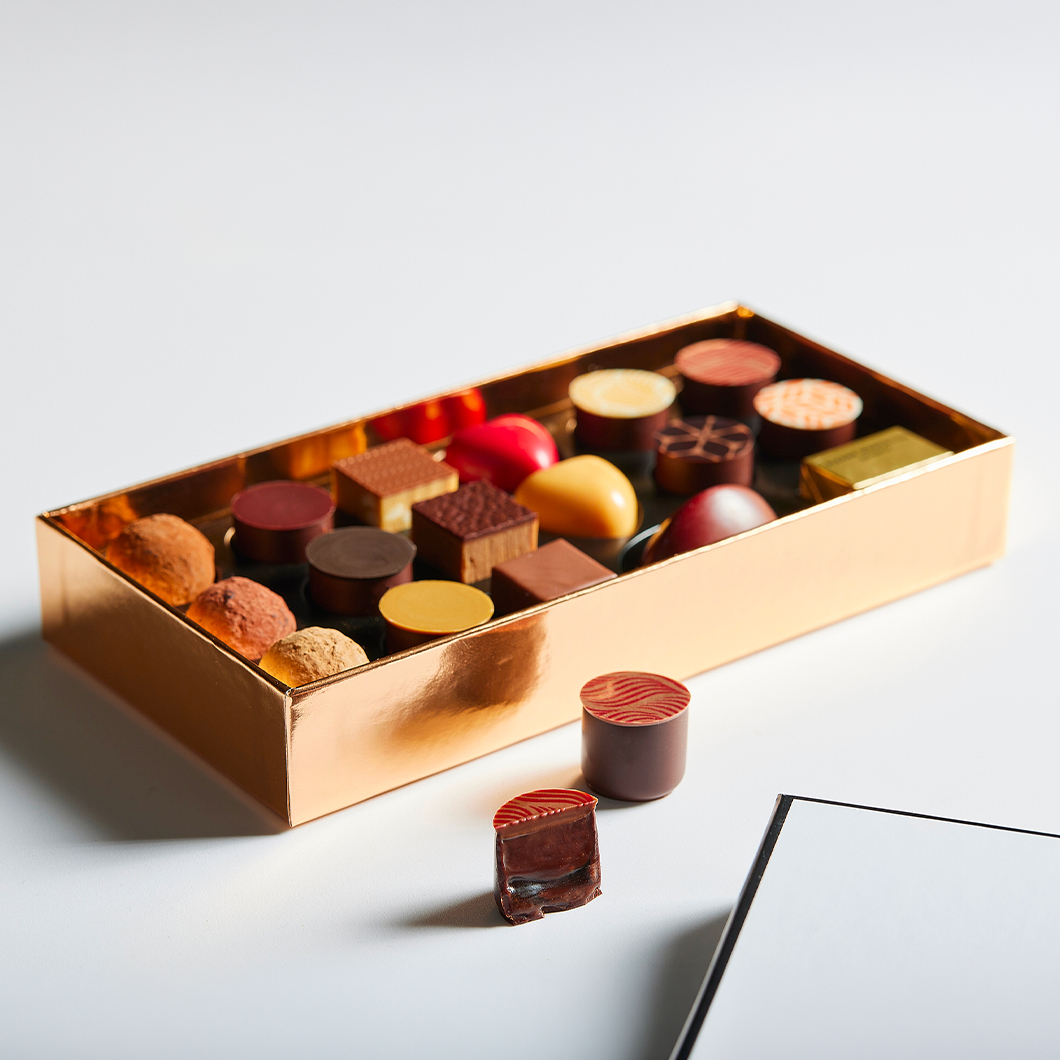
Lift the lid of a box of Belgian chocolates and, more often than not, you will find a chocolate ballotin: a small, sturdy, tapered box, its pralines nestled in neat rows beneath a ribbon.
It is such a familiar gesture that few people ever stop to ask where it came from, or why chocolatiers still reach for this particular shape more than a century later.
At Maison Pierre Marcolini, we believe a good question is worth asking twice. So let us look at the chocolate box itself: what it is, where it began, and how it continues to evolve.
What is a chocolate ballotin, exactly?
A ballotin is a small, folded box, traditionally made from a single sheet of card, designed to hold individual pralines without crushing them.
Its name comes from the French ballot, meaning a small bundle or parcel, a nod to its original purpose: gathering loose chocolates into something you could carry home with ease. Unlike a rigid, pre-built box, a true ballotin is assembled from one continuous fold, closed with interlocking flaps rather than glue near the chocolates.
That construction is not a detail. It is the whole idea.
Over a century, the word has travelled well beyond Belgium's borders. Ask for a "ballotin" in a chocolate shop almost anywhere in the world today, and you will be understood; a rare thing for a packaging term to achieve.
Few boxes earn a name of their own; fewer still keep it for a hundred years.
Origins of the ballotin: a small box with a big story
The chocolate ballotin was born in Brussels in the early twentieth century, at a moment when Belgian chocolatiers were searching for a better way to send their pralines home with customers.
Until then, chocolates were often wrapped in paper cones, a charming but fragile solution. Loose and unprotected, the pralines inside would crush, melt, or lose their shape long before reaching the table.
The answer was a folded cardboard box: compact enough to carry with ease, sturdy enough to protect what was inside, and refined enough to feel like a gift in itself.
The idea caught on quickly. Within a few years, the ballotin had become the standard across Belgium's chocolate houses. It remains, to this day, one of the country's most recognisable exports, alongside the praline it was designed to protect.