Discover the world of artisanal chocolate at Maison Pierre Marcolini, where one of the most delightful creations is the praline, a delectable treat with a rich history dating back centuries. Learn about the origins of this delicacy, its ingredients, various types, and its use in modern pastry making.
The History and Composition
The praline, an age-old specialty from Belgium and France, traces its roots to the 17th century, when confectioners first experimented with blending hazelnuts, almonds, and sugar, laying the foundation for the praline we savor today. This luxurious blend of finely powdered nuts, typically hazelnuts or almonds, mixed with caramelized sugar, results in a smooth, flavorsome paste. Its seamless texture and exquisite taste are achieved through a meticulous grinding and blending process, a craft that demands expertise to ensure top-notch quality.
Varieties of Praline
Praline comes in a myriad of forms, catering to diverse tastes and preferences. From crunchy variations to creamier textures and aromatic twists, like coffee or dark chocolate praline, each type offers a unique sensory experience and aroma.
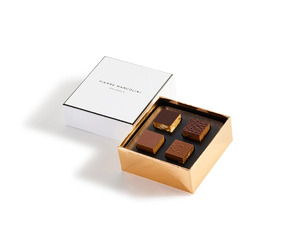
You can explore this array of flavors and textures by opening our Malline Pralines.
Beyond its traditional use, praline serves as a versatile ingredient, adding depth and a luxurious touch to an array of sweet creations, from cake fillings to delicate homemade chocolates and more. Its adaptability has allowed chefs to experiment with novel flavor combinations, pushing the boundaries of culinary creativity and sophistication.
There's nothing like the pleasure of preparing your own praline. Follow each step of Maison Pierre Marcolini's detailed recipe to create your personalized version of this delicious paste. With the right ingredients, proper tools, and a little patience, you can enjoy homemade praline of exceptional quality, to savor alone or share with your loved ones.
The necessary ingredients: 100g of hazelnuts 150g of sugar
1- Roast the hazelnuts on a baking sheet with parchment paper for 14 to 16 minutes in an oven at 160 degrees. Let cool, then peel them by rubbing them against each other in a kitchen towel. 2- Pour the 150g of sugar into a saucepan over medium heat, let it melt and turn into a light-colored caramel. Add the hazelnuts and stir for a few seconds. 3- Spread the mixture on a baking sheet, flatten everything out by placing a second sheet of baking paper on top, and let cool. 4- Break the hazelnuts and caramel and blend everything together until you obtain the famous praline.
Praliné: A Gourmet Essential
Praline remains an everlasting gem in the realm of gourmet cuisine, offering a symphony of flavors and textures that tantalize the taste buds. Whether enjoyed alone or used as a secret ingredient in pastries, this delicacy continues to delight aficionados of artisanal chocolate and refined cuisine, turning each bite into a moment of pure bliss.
Pierre Marcolini uses cookies to ensure proper functioning and optimal security of browsing through its website. Cookies allow us to offer you the best possible experience. By clicking on Agree, you consent to the use of these cookies. Please note that you can change your cookie settings at any time. For more information, please read the Cookies Policy page.
Functional Cookies
Cookies are essential in order to enhance your browsing experience, they allow you to use the main features of the website such as managing your shopping cart or maintaining your identification throughout your browsing experience.
Without these cookies, the website cannot function which means they cannot be deactivated.
Please be assured that these cookies do not store any personal data.
Marketing and other cookies
Cookies allow us to record information about browsing through our website in order to offer you personalized offers. They also improve the functionality and personalization of our website, such as the use of videos.
Google Analytics cookies
Cookies allow us to collect information on the use and performance of our website in order to improve its operation, attractiveness and content.
The information collected by these cookies is aggregated, and is therefore anonymous.